HIDCOTE MANOR GARDEN
I find taking photographs in the rain very difficult while balancing the brolly on my shoulder. Add a wind gust and the brolly goes flying. Suddenly rain is everywhere and it's not pleasant anymore! None of this, however, could spoil my first visit to Hidcote. I had been looking forward to visiting this garden for such a long time!
We are into week two of our garden tour and even more fascinating than the gardens themselves, is finding out more about their creators.
Hidcote Manor Garden is an Arts and Crafts garden and one of the most famous gardens in the world. When Lawrence Johnston's mother bought Hidcote in early 1900, there was no garden there with the exception of a few mature trees. Lawrence began developing the garden in 1907 and his development of the garden continued for the next 40 years. He travelled the world in search of unusual and interesting plants and created a 'laboratory' at Hidcote. After finding the winters at Hidcote a little too harsh for the acclimatisation of these unusual plants, he bought a series of agricultural terraces called Serre de la Madone in France. This was to become his Riviera residence. I am hoping to do a new post on this, his second garden after some more research and hopefully a visit.
Originally an American, Lawrence Johnston was educated in Paris and Cambridge. In 1900, after he became a British subject, he joined the Imperial Yeomanry and was posted to South Africa where he fought in the Second Boer War. It was during the time he spent there that Johnston developed a love of South Africa flora. In 1902, he served in World War 1 and attained the rank of Major.
I can imagine the relief he experienced when returning to Hidcote after the time spent in the forces. The peace and beauty of the countryside would have been a balm to his soul. He was a reserved man and rarely allowed any photographs of his garden. He shared his plans and the garden with very few.
Lawrence Johnston acquired an extraordinary knowledge of the plant kingdom and remained a plant hunter all his life.
Lavender 'Hidcote' and Hypericum 'Hidcote' originated from this garden. A yellow, semi-double climber bears the name 'Lawrence Johnston'. The sheer size and scale of the garden was truly impressive and it was thanks to The National Trust who took over the garden in 1948, that the garden became available to the public and has been enjoyed by so many.
 |
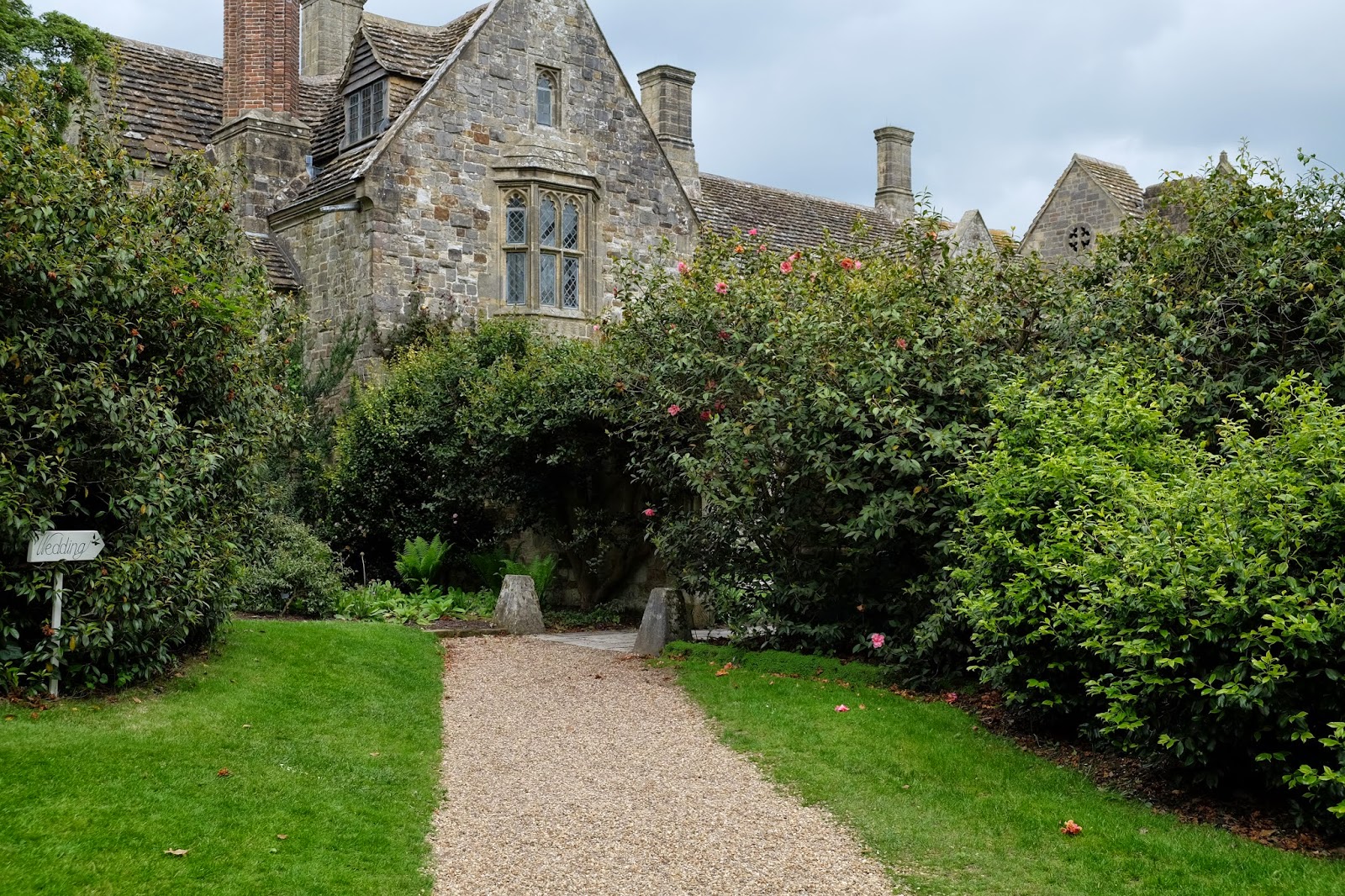
| Hidcote Manor House |
 |
| The White Garden |
 |
| The Old Garden |
 |
| The Great Lawn |
 |
| The photo above is not mine. I included this to highlight the problems the Yew bird topiaries are experiencing which is obvious in my photo above this one. |
 |
| Auriculas galore. In 2011 The National Trust commissioned Michael Dillon to paint the mural as seen here in the Italian House. The original mural painted by Johnston had virtually worn away. |
 |
| The central Stream Garden |
 |
| The Long Walk |
 |
| The Long Walk facing the Gazebos |
 |
| The Long Walk |
 |
| The Pillar Garden |
 |
| The Pillar Garden |
 |
| The Long Walk |
 |
| This peaceful scene just off the edge of the garden |
 |
| The Stilt Garden |
 |
| The Long Borders. This was at the end of a couple of hours in the garden and the weather greatly improved! |
 |
| Lawrence Johnston's tool shed |